Tag: Tuna Fishing

Tuna 976 The Ultimate Guide to Tuna Fishing

Tuna 976 The Ultimate Guide to Tuna Fishing

Tuna-976 is more than just a website, it’s a vital resource for anyone passionate about tuna fishing. Here’s an in-depth look at what Tuna-976 offers and how it can help you become a more successful angler.

Tuna 976 What is It?

Tuna-976 is your go-to for everything tuna. It’s not just a fishing report. It’s a community. It’s where anglers share stories, tips, and the latest news.

Why Tuna-976?

Tuna-976 offers daily updates. You get real-time fishing reports. Know where the fish are biting. Learn what bait is working. Stay ahead of the game.

Tuna 976

Tuna Fishing Reports

One of the standout features of Tuna-976 is its daily fishing reports. These reports provide up-to-date information on.

  • Locations– Specific areas where tuna are currently being caught.
  • Conditions– Weather and water conditions affecting tuna behavior.
  • Bait and Tackle– Recommendations on what bait and gear are working best.
  • Catch Reports– Details on the size and quantity of tuna being landed.

These real-time updates help you plan your fishing trips more effectively, ensuring you’re always fishing in the right spots with the right equipment.

Tuna Fishing Community Forums

Tuna-976 boasts an active community forum where anglers from all over share their experiences, tips, and advice. The forums are a great place to.

  • Ask Questions- Get answers from experienced tuna fishermen.
  • Share Stories- Post about your latest catch and read others’ fishing tales.
  • Find Partners- Connect with other anglers for joint fishing trips.
  • Discuss Gear- Talk about the best rods, reels, lines, and lures.

Expert Fishing Articles and Guides

The website features a wealth of expert articles and guides covering various aspects of tuna fishing, such as.

  • Technique Tutorials- Step-by-step guides on trolling, chunking, jigging, and popping.
  • Gear Reviews- In-depth reviews of rods, reels, lines, and other essential equipment.
  • Species Information- Detailed profiles of different tuna species, including their habits and habitats.
  • Seasonal Tips- Advice on how to adapt your strategies based on the time of year.

These resources are invaluable for both beginners and seasoned anglers looking to refine their skills.

Tuna Fishing Weather and Tide Information

Successful tuna fishing often depends on understanding the weather and tides. Tuna-976 provides comprehensive weather forecasts and tide charts, including.

  • Wind Speeds and Directions- Crucial for planning your fishing routes.
  • Tide Times- Knowing when the tides change can affect where tuna are feeding.
  • Sea Conditions– Information on wave heights and water temperatures.

Having access to this data helps you make informed decisions about when and where to fish.

Catching Tuna Event Announcements and Fishing Charters

Tuna-976 keeps you informed about upcoming fishing events, tournaments, and charter opportunities. You can find information on.

  • Tournaments- Details on local and regional tuna fishing competitions.
  • Charter Services- Listings of fishing charters with experienced captains who know the best tuna spots.
  • Workshops and Clinics- Opportunities to learn from the pros through hands-on training sessions.

Participating in these events can enhance your skills and provide exciting opportunities to catch big tuna.

Tuna Conservation and Sustainability Information

Tuna-976 is committed to promoting sustainable fishing practices. The website offers information on.

  • Regulations- Up-to-date rules and regulations regarding tuna fishing limits and seasons.
  • Conservation Efforts- Articles on how to fish responsibly and support tuna conservation.
  • Catch and Release Tips- Best practices for releasing tuna to ensure their survival.

By following these guidelines, you can help preserve tuna populations for future generations.

Tuna Photo and Video Galleries

Visual learners will appreciate Tuna-976’s extensive photo and video galleries. These galleries showcase.

  • Catch Photos- Impressive tuna catches submitted by the community.
  • Technique Demonstrations- Videos showing fishing techniques in action.
  • Gear Tutorials– Visual guides on setting up and using various types of equipment.

Seeing these techniques and successes can inspire and educate you, making you a better angler.

Personalized Alerts and Notifications

Stay informed with personalized alerts and notifications from Tuna-976. You can set up.

  • Fishing Condition Alerts- Get notified when conditions are ideal for tuna fishing.
  • Catch Reports– Updates on significant catches in your area.
  • Event Reminders- Alerts for upcoming tournaments and fishing events.

These notifications ensure you never miss out on crucial information.

Fishing Membership Benefits

For those looking for even more resources, Tuna-976 offers a premium membership with additional benefits, such as.

  • Exclusive Content- Access to members-only articles, guides, and videos.
  • Discounts- Special offers on fishing gear and charter services.
  • Priority Support- Faster responses to your questions and inquiries.

Joining as a member can provide you with even more tools to enhance your tuna fishing experience.

Tuna 976 Final Thoughts

Tuna fishing is a thrilling sport. With Tuna-976, you have the tools and community to succeed. Follow them and you’ll be on your way to catching your next big tuna.

Tight lines and happy fishing!


Keywords: tuna-976, tuna fishing, catching tuna, tuna fishing reports.

Pursuit of Cobra Tuna

Pursuit of Cobra Tuna

Fishing is often viewed as a relaxing pastime, a way to connect with nature and enjoy the simple pleasures of life. But for those who take it seriously, fishing can be a thrilling adventure, full of challenges and triumphs. One of the most exhilarating experiences in the fishing world is the pursuit of cobra, often referred to as the “cobra” of the sea for its speed, strength, and cunning nature. In this post, we’ll dive into the strategies, stories, and sheer excitement that come with the pursuit of cobra.

The Legend of the Cobra

The term “cobra” might be unfamiliar to some, but seasoned anglers know it well. Tuna are often called cobras due to their sleek, powerful bodies and the intense fight they put up when hooked. These fish are not just another catch, they are the ultimate prize in the sport fishing world.

Tuna are known for their incredible speed, which can reach up to 75 kilometers per hour (about 47 miles per hour). They are also highly intelligent and capable of outmaneuvering even the most experienced fishermen. This combination of speed and smarts makes them one of the most challenging and rewarding catches.

Preparing for the Cobra Pursuit

Catching a tuna isn’t just about luck, it requires preparation, knowledge, and the right equipment. Here’s a breakdown of what you’ll need to increase your chances of success in the pursuit of cobra.

Gear Up for Catching Tuna

The right gear is essential for any successful cobra fishing expedition. A high-quality rod and reel designed for big game fishing are a must. You’ll need a reel with a high line capacity and a strong drag system to handle the powerful runs of a tuna. A sturdy, lightweight rod that can withstand the pressure of a prolonged fight is also crucial.

Line choice is another critical factor in how to catch cobra. Braided line is often preferred due to its strength and thin diameter, which allows you to spool more line on your reel. However, many anglers use a fluorocarbon leader to increase their chances, as it’s less visible to fish underwater.

Tuna Fishing TackleBraided Fishing Line
See our post about Tuna Fishing Equipment. 

Cobra Fishing Bait and Lures

Tuna are predatory fish, so using live bait can be highly effective in cobra fishing. Common choices include mackerel, herring, and squid. If live bait isn’t available, lures can also do the trick. High-speed trolling lures, such as cedar plugs, daisy chains, and jet heads, are popular options. The key is to mimic the movement of the tuna’s natural prey, enticing them to strike.

See our post about Tuna Fishing Lures.

Know Your Waters

Understanding where to find tuna is half the battle in the pursuit of cobra. These fish are migratory, often following the warm currents of the ocean. Researching their patterns and knowing the best times of year for tuna fishing in your area can significantly improve your chances. Tuna are commonly found in the Atlantic, Pacific, and Indian Oceans, with hot spots including the Gulf of Mexico, the Mediterranean, and the waters off the coast of Japan.

Chasing Cobra or Tuna

Once you’re equipped and have located the tuna, the real adventure begins. The chase is what makes the pursuit of cobra so thrilling. Here’s what you can expect when you’re out on the water.

Spotting the Tuna

Tuna often travel in schools, so once you spot one, there’s a good chance more are nearby. Look for signs such as diving birds, jumping fish, and surface disturbances. These indicators can lead you to a feeding frenzy where tuna are actively hunting smaller fish, making cobra fishing more exciting.

Hooking up with Tuna

When a tuna takes your bait, the real excitement starts. The initial run is explosive, and you’ll need to be ready for it. Tuna are known for their long, powerful runs that can strip hundreds of yards of line from your reel in seconds. This is where your drag system and line capacity are put to the test in cobra fishing.

Fighting Cobra or Tuna

The fight with a tuna is a test of endurance, strength, and technique. Unlike some fish that tire quickly, tuna can battle for hours. It’s essential to stay calm and focused, using your body’s weight to your advantage and keeping steady pressure on the fish.

One technique used by experienced anglers in the pursuit of cobra is the “pump and reel.” This involves lifting the rod to gain line and then reeling in as you lower the rod. It’s a slow and steady process that helps prevent the line from breaking and reduces fatigue.

Landing the Cobra Tuna

Successfully landing a tuna is a moment of triumph in cobra fishing. As the fish tires and comes closer to the boat, the challenge isn’t over. Tuna are notorious for their last-ditch efforts to escape, often making a final, desperate run. Patience and careful handling are crucial at this stage to avoid losing your catch.

Gaffing is the most common method to bring the fish aboard. A well-placed gaff shot, usually in the head or behind the gill plate, ensures a secure hold. Once the tuna is on the boat, it’s time to celebrate your hard-earned victory in how to catch cobra.

More tips and tricks on How To Catch Tuna.

Stories from the Sea

Every angler has a story, and the pursuit of cobra is no different. Here are a few tales from the sea that capture the spirit and excitement of tuna fishing.

The One That Got Away

Every fisherman has a tale of the one that got away. For Jake, a seasoned angler from California, it was a bluefin tuna estimated to be over 800 pounds. “We hooked it early in the morning,” he recalls. “It took us nearly six hours to get it close to the boat. Just as we were about to gaff it, it made one last run and snapped the line. It was heartbreaking, but that’s fishing. You win some, you lose some.”

A Beginner’s Luck

Not all tuna stories end in defeat. Sarah, a novice fisherman, landed her first tuna on a family fishing trip off the coast of Maine. “I had no idea what I was doing,” she laughs. “I just followed my dad’s instructions and somehow managed to reel in a 200-pounder. The fight was intense, but the feeling of landing that fish was incredible. I’m hooked for life now.”

The Record Breaker

For Tom, a fishing guide in Florida, breaking a record was a dream come true. “I’ve been chasing tuna for over 20 years,” he says. “Last summer, we hooked a massive yellowfin. It took nearly eight hours to bring it in, but it was worth every second. When we weighed it, it broke the state record at 345 pounds. That was a day I’ll never forget.”

Thrill of Cobra Pursuit

The pursuit of cobra is more than just fishing, it’s an adventure that tests your skills, patience, and determination. It’s about the thrill of the chase, the battle with a powerful adversary, and the stories that come from those experiences. Whether you’re a seasoned pro or a novice looking for your first big catch, tuna fishing offers an unmatched sense of excitement and fulfillment.

So, gear up, hit the water, and join the ranks of those who have faced the cobra and come out victorious. The ocean is waiting, and the thrill of the pursuit of cobra is calling your name. Happy cobra fishing!

How to Catch Tuna Trolling a Guide to Tuna Trolling

How to Catch Tuna Trolling a Guide to Tuna Trolling

Trolling is a method of fishing where one or more fishing lines, baited with lures or bait fish, are drawn through the water behind a moving boat. If you’re a fishing enthusiast, there’s nothing quite like the thrill of hooking a tuna while trolling. Tuna trolling is not just about catching fish….it’s an art, a science, and an adventure all rolled into one. In this guide, we’ll take you through everything you need to know to master the art of tuna trolling and HOPEFULLY have you bringing home a prized catch.
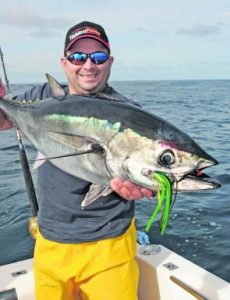
Fishing Trolling Equipment Needed

Before you set out on your tuna trolling adventure, it’s crucial to make sure you have the right gear. Here’s a rundown of the essential equipment you’ll need.

  • Rods and Reels… Opt for heavy-duty trolling rods and reels capable of handling the strength and speed of tuna. Check out our post for the best Rods and Reels
  • Lines… Choose high-quality, braided fishing lines with a test strength of at least 50 pounds to withstand the fight with a tuna.
  • Lures and Baits… Tuna are attracted to a variety of lures, including diving plugs, feathers, and squid skirts. Experiment with different colors and sizes to find what works best. We think green works best and always start with that.
  • Terminal Tackle… Stock up on swivels, leaders, and hooks designed to withstand the force of a tuna strike.
  • Check out our post on Spreader Bars

Where to Find Tuna While Trolling

Searching for tuna can be an exciting adventure. It can also be extremely frustrating unless you know what you are looking for.

Tuna can be found in both offshore and nearshore waters, depending on the species and the time of year. Generally in the summer months you will have an easier time finding schools of tuna. Typically, they will stay near the surface of the water while hunting for schools of bait fish. In the winter months, tuna tend to hunt deeper and rarely venture up to the surface. Additionally, tuna fishing is usually better in low light conditions, such as those in the late afternoon.

To increase your chances of success, research local fishing reports, consult with experienced anglers, and keep an eye on oceanographic conditions. Look for signs of tuna activity, such as diving birds, feeding frenzies, or floating debris, which can indicate the presence of baitfish and attract hungry tuna.

Trolling for Tuna Techniques and Tips

Trolling is a tried and true method for targeting tuna, but it requires finesse and patience. Here are some tips for mastering the art of trolling.

  • Speed Matters… Tuna are fast swimmers, so adjust your trolling speed accordingly. Aim for speeds between 5 and 10 knots, depending on the lure and sea conditions.
  • Depth Control… Use downriggers, planers, or diving weights to control the depth of your lures and keep them in the strike zone.
  • Keep an Eye on the Spread… Spread out your trolling lines at different distances and angles behind the boat to cover a larger area and increase your chances of attracting tuna.
  • Stay Alert… Pay close attention to your rod tips for signs of strikes or irregularities in the trolling pattern. When a tuna hits, be prepared for a powerful fight!

Tuna trolling requires patience and perseverance. It’s not uncommon to spend hours on the water without a bite, but don’t lose hope! Stay focused, keep your lines in the water, and be ready to spring into action when the moment comes. Remember, the thrill of hooking a tuna makes the wait well worth it.

Tuna Fishing Boat Speed for Tuna Trolling

Boat speed is one of the most important factors to get right when trolling for tuna. Generally the ideal speed falls between 4 and 9 knots but this can vary depending on several factors. The type of tuna you being targeted, the lures you are using, and the water conditions are all factors. Larger tuna like bluefin might require slightly slower speeds when using heavy-duty trolling setups, while smaller tuna such as yellowfin or skipjack can be targeted with faster speeds to mimic the movement of scared baitfish.

The type of lure or bait also influences the speed. When trolling with live bait slower speeds are essential to keep the bait alive and swimming naturally. For artificial lures faster speeds closer to the 6–9 knot range are often better for creating the kind of erratic motion that excites tuna. If you are using surface lures, you will want enough speed to create a noticeable splash or bubble trail without the lure skipping unnaturally across the water. It may take practice but it is important to get it right.

Water conditions also play a significant role. In rough seas slower speeds are necessary to maintain control and ensure your lures stay submerged properly. Calm waters may allow for slightly faster speeds helping cover more ground while maintaining the effectiveness of your presentation.

Dialing in the right trolling speed is a balance of these elements and often involves a bit of trial and error. Monitor the behavior of your lures in the water, adjust your speed as needed and don’t be afraid to experiment until you find what works best for the conditions and the fish on any given day. Consistently fine tuning your trolling speed can significantly increase your chances of hooking into a prized tuna.

How to Land a Tuna

Congratulations, you’ve hooked a tuna! Now comes the fun part, landing your prize catch. Here are some tips for safely and efficiently bringing a tuna on board.

  • Keep the Pressure On.. Maintain constant pressure on the fish to tire it out and prevent it from shaking the hook.
  • Use a Gaff or Net.. Once the tuna is tired out, use a gaff or a large landing net to hoist it aboard. Be careful not to damage the fish or your equipment in the process.
  • Bleed and Chill.. To preserve the quality of your catch, bleed the tuna immediately after landing by cutting its gills and then chill it on ice as soon as possible.

Tuna Fishing Ethics

As responsible anglers, it’s essential to prioritize sustainable fishing practices to ensure the long term health of tuna populations and marine ecosystems. Always adhere to local regulations regarding catch limits, size restrictions, and seasonal closures. Consider practicing catch and release for smaller tuna or species in decline, and minimize your impact on the environment by properly disposing of trash and fishing gear.

Tuna trolling is more than just a hobby; it’s a way of life for many anglers who crave the thrill of the chase and the satisfaction of landing a prized catch. Armed with the right gear, knowledge, and techniques, you’re ready to embark on your own tuna trolling adventure. So cast off, explore new waters, and reel in the big ones. Happy tuna fishing.

Tuna Trolling Lures

Keywords

  • Tuna trolling techniques
  • Best lures for tuna trolling
  • Trolling speed for tuna
  • Offshore trolling for tuna
  • Tuna fishing charter
  • Tuna fishing Trip
  • Tuna trolling rods and reels
  • Tuna trolling setups
  • Tuna Fishing Show
  • Ideal trolling depths for tuna
  • Trolling patterns for tuna
  • Live bait trolling for tuna
  • Artificial lures for trolling
  • Tuna trolling in deep water
  • Tuna trolling gear reviews
  • Trolling lines for tuna fishing
  • Tuna trolling rigging tips
  • Trolling strategies for big tuna
  • Tuna trolling boat setup
  • Best times for tuna trolling
  • Tuna trolling charter options
  • Seasonal tuna trolling tips
  • Tuna trolling safety practices
Trolling Tuna – How to Catch Tuna By Trolling

Trolling Tuna – How to Catch Tuna By Trolling

tuna trolling

Trolling for tuna is not merely a fishing technique; it’s an intricate dance between angler and fish,

requiring skill, patience, and a deep understanding of the ocean’s dynamics. In this comprehensive guide, we’ll delve into the nuances of trolling for tuna and explore key strategies to optimize your success on the water.

Understanding Tuna Behavior

To effectively target tuna, it’s crucial to comprehend their behavior patterns. Tuna are highly migratory species, constantly on the move in search of food and optimal environmental conditions. They traverse vast expanses of ocean, from coastal waters to the open sea, following prey abundance and favorable temperature gradients.

Tuna are voracious predators, known for their affinity for baitfish, squid, and other marine organisms. They’re attracted to areas rich in food sources, such as upwellings, temperature breaks, and underwater structures. By studying these habitat features and their relationship to tuna behavior, anglers can better predict where to find these prized fish.

Trolling for Tuna Techniques

Trolling is a versatile fishing method that allows anglers to cover large areas of water while presenting baits or lures at various depths and distances from the boat. Here are some essential tips to enhance your tuna trolling success:

  1. Select the Right Lures – Tuna can be selective feeders, so having a diverse selection of lures is essential. Cedar plugs, skirted trolling lures, and feather jigs are popular choices. Experiment with different colors, sizes, and actions to determine what triggers the most strikes. More about Tuna Lures
  2. Adjust Your Speed – Tuna often have a preferred feeding speed, so be prepared to adjust your trolling speed accordingly. Start at a moderate pace and vary your speed until you find what works best on any given day. In Depth guide to tuna trolling
  3. Use Teasers – Incorporating teasers into your trolling spread can attract curious tuna and increase your chances of hooking into fish. Teasers create additional visual stimulation, mimicking a school of baitfish and enticing predators to strike. More info about tuna teasers and spreader bars.
  4. Vary Your Depths – Tuna can be found at different depths depending on factors such as water temperature and the availability of prey. Experiment with trolling at various depths using planers, diving plugs, or downriggers to target fish holding at different levels in the water column.
  5. Pay Attention to Signs – Keep an eye out for signs of tuna activity, such as diving birds, surface splashes, or feeding frenzies. These indicators can lead you to productive fishing areas where tuna are actively feeding.

Tuna Trolling Speed

The ideal tuna trolling speed usually falls between 5 and 9 knots, but there is no one speed fits all. Faster speeds (7–9 knots) work well when using hard-body lures or cedar plugs, which can handle the pressure and mimic fleeing bait. If you are using more delicate or soft-bodied lures, dialing it back to 4–6 knots gives them that irresistible natural wobble. Keep an eye on your lure action if it is skipping across the water like a stone, you are probably going too fast.

Varying your trolling speed for tuna mid-trip can also provoke strikes. A quick throttle-up or slow-down can trigger aggressive tuna thinking their prey is trying to escape. Combine this with sharp turns or S-curves, and suddenly your spread looks like a panicked school of fish which is basically a dinner bell for hungry tuna. Always be tweaking and watching. Tuna love inconsistency.

Trolling Motor Tips

Your trolling motor can make or break your day on the water. For tuna, you need power, precision, and quiet operation. The last thing you want is a clunky motor alerting fish from 100 yards out. Use your motor to control drift, angle your spread in the right direction, and keep your lures at the perfect speed. If you’re in rougher water or running multiple lines, a variable-speed motor gives you the edge you need.

When you’re working your trolling spread, try adding slight course changes. Zigzags and S-turns help your lures dart, speed up, or slow down just like real baitfish would. Keep an eye on your battery levels too. Nothings worse than hooking into a monster and realizing your motor’s tapped out. Stay sharp, stay powered, and let your trolling motor do some of the heavy lifting.


Tuna Trolling Gear and Equipment

When gearing up for tuna trolling, it’s essential to invest in high-quality equipment that can withstand the rigors of offshore fishing. Start with a sturdy trolling rod designed specifically for battling powerful tuna species. Look for rods with a strong backbone and enough flexibility to handle the unpredictable movements of a hooked fish. Pair your rod with a reliable trolling reel equipped with a smooth drag system capable of applying consistent pressure during long fights.

In terms of terminal tackle, opt for heavy-duty monofilament or braided fishing line with a high tensile strength to withstand the sharp teeth and powerful runs of tuna. Consider using a top-quality leader material to prevent fish from breaking off near the boat. When it comes to lures, stock your tackle box with a variety of options to cover different trolling scenarios and mimic various baitfish species. Additionally, don’t forget essential accessories such as fighting belts, gaffs, and fish handling gloves to ensure a safe and successful fishing experience.

Trolling Tuna Lures

When it comes to trolling tuna lures, variety is your best friend. Cedar plugs, feather jigs, soft plastics, and spreader bars all have their moment to shine, depending on conditions and target species. Cedar plugs are an old-school favorite—simple but deadly. Feather jigs flash in the sunlight and trigger fast reactions, while soft plastics mimic the subtle movement of wounded baitfish. It’s smart to run a mix in your spread to figure out what the tuna are feeding on that day.

One trick that never fails? Match your lures to the size and color of local bait. If flying fish or sardines are around, toss in some lures that look the part. Don’t forget to adjust your trolling lure placement—putting one right in the prop wash can actually be super effective! Tuna aren’t always shy. Just make sure your gear is up to the task—because when a big one hits, it’s game on.

By honing your trolling skills and understanding the intricacies of tuna behavior, you can greatly increase your chances of success on the water. Remember to remain adaptable and willing to adjust your tactics based on changing conditions and fish behavior. With dedication and perseverance, you’ll be well-equipped to master the art of catching tuna through trolling. Happy fishing!

Trolling Tuna FAQ

  1. What type of tuna species can be caught through trolling?
    • Trolling is effective for various tuna species like yellowfin, bigeye, bluefin, and albacore. Each species may have different preferences, but all can be caught through trolling.
  2. What is the best time of year for tuna trolling?
    • The best time varies by location and species. Research local fishing reports and consult experienced anglers to find the optimal time in your area.
  3. How fast should I troll for tuna?
    • A typical trolling speed ranges from 6 to 8 knots. Experiment with speeds and adjust based on the fish’s response.
  4. What depth should I troll for tuna?
    • Cover different depths using planers, diving plugs, or downriggers to target tuna effectively.
  5. What types of lures are most effective for trolling tuna?
    • Tuna strike various lures, including cedar plugs, skirted trolling lures, and feather jigs. Match the lure to prevailing conditions and fish preferences.
  6. Any special techniques for hooking and fighting tuna while trolling?
    • Stay vigilant, be ready to strike, and use proper fighting techniques. Heavy-duty tackle, strong knots, and smooth drag settings help prevent break-offs.

Check out other recommended products for Tuna Fishing

Stay tuned for more tips and tricks on How To Catch Tuna.

Keywords:

  • trolling tuna
  • trolling techniques
  • trolling motor tips
  • trolling methods
  • yellowfin tuna trolling
  • trolling for yellowfin tuna
  • tuna trolling techniques
  • trolling tuna lures
  • tuna trolling speed

Dolphins Help Fishermen Catch Tuna

Dolphins Help Fishermen Catch Tuna

tuna and dolphins
tuna and dolphins

Learn how recreational anglers can leverage dolphin behavior to locate tuna hotspots, follow pods to strategic fishing grounds, and adopt responsible practices. Dive into this insightful exploration of the unique relationship between these marine species and enhance your tuna fishing experience with the wisdom of dolphins.

If you’ve ever cast your line into the vast, blue expanse of the ocean, you know the thrill of the chase. Tuna fishing takes this excitement to a whole new level, and there’s an unexpected dance partner in these waters being dolphins. Join us as we explore the intricacies of tuna fishing and the fascinating connection between anglers and these intelligent marine creatures.

Recreational anglers often find themselves in awe of the natural beauty of the ocean, and those lucky enough might have encountered dolphins during their fishing adventures. Believe it or not, these intelligent marine companions can serve as valuable allies in the pursuit of tuna. Here’s a detailed guide on how recreational anglers can use dolphins to track and, perhaps, catch the prized silver treasures of the sea.

Tuna Fishing Quest

Tuna fishing is a pursuit that combines skill, patience, and a touch of luck. Whether you’re a seasoned angler or a newbie trying to hook the big one, the open sea holds mysteries waiting to be unraveled. Tuna, with their sleek bodies and unparalleled speed, are the crown jewels of the deep. Anglers embark on journeys, often spanning miles, to find the elusive schools and bring home the prized catch.

Dolphin Tuna Controversy

But where there’s tuna, there are dolphins. These playful and intelligent creatures share the same waters, creating a dynamic that adds both complexity and controversy to the pursuit of tuna fishing. Tuna often swim beneath schools of dolphins, making it challenging for fishermen to target their catch without unintentionally ensnaring dolphins in their nets.

The Tuna and Dolphin Dance

Tuna fishing and dolphin protection have been at odds for years, leading to regulations and guidelines aimed at minimizing harm to these marine mammals. Fishermen, too, have adapted their methods, using dolphin-safe gear and technologies to distinguish between tuna and dolphins in the vast ocean expanse. It’s a delicate dance where the balance between a thriving tuna industry and the preservation of marine life hangs in the balance.

How Dolphins Help Fishermen

Dolphin Observation is Key

One of the first steps in utilizing dolphins for tuna fishing is keen observation. Dolphins are highly skilled hunters, and their behavior can provide valuable insights into the presence and location of tuna schools. Keep an eye out for areas where dolphins are actively feeding or displaying playful behavior, as this could indicate the proximity of tuna.

Follow the Dolphin Pod

tuna and dolphin
tuna and dolphin

Dolphins and tuna often share the same feeding grounds. If you spot a pod of dolphins actively swimming or feeding, consider following them at a safe distance. Dolphins have an uncanny ability to locate schools of fish, including tuna, as they are skilled at detecting changes in water pressure and movement.

Birdwatching for Tuna Hotspots

Dolphins and tuna attract a variety of seabirds, creating a natural alliance between these three marine species. Seabirds, such as seagulls and terns, are excellent indicators of tuna activity. If you observe birds diving into the water to feed, there’s a good chance that tuna are present. Dolphins often follow the same cues, making them effective navigational guides.

Tuna and Dolphins Association

Understanding the natural association between tuna and dolphins is crucial. Tuna are known to swim beneath schools of dolphins for protection and to take advantage of the smaller fish disturbed by the dolphins’ movements. Recreational anglers can strategically position their boats near dolphins, casting their lines in the hope of enticing tuna lurking below.

Use Fish Aggregating Devices (FADs)

Fish Aggregating Devices, or FADs, are man-made structures designed to attract fish. Dolphins are known to congregate around these devices, making them strategic locations for tuna fishing. Recreational anglers can identify FADs in their fishing areas and position themselves accordingly, leveraging the presence of dolphins to guide them to potential tuna hotspots.

Tuna and Dolphins FAQ

Q: How can recreational anglers use dolphins to locate tuna? A: Recreational anglers can observe dolphins’ behavior, follow their pods, and pay attention to areas where dolphins are actively feeding. Dolphins often indicate the presence of tuna, making them valuable guides for anglers.

Q: Are there specific signs that dolphins give when tuna is nearby? A: Dolphins may exhibit heightened activity, such as leaping, splashing, or focused swimming. These behaviors can indicate the presence of tuna, and anglers can strategically position themselves to capitalize on this association.

Q: Why do tuna and dolphins swim together? A: Tuna and dolphins share a symbiotic relationship where tuna often gather beneath schools of dolphins. The exact reasons for this association are not fully understood, but it is believed to be related to feeding patterns and protection from predators.

Q: How do fishermen avoid catching dolphins? A: Fishermen use dolphin-safe fishing practices, including the deployment of Fish Aggregating Devices (FADs) and the use of specialized gear like pole and line fishing. These methods help target tuna specifically, reducing the risk of unintentionally capturing dolphins.

Q: Is it ethical to use dolphins to track tuna? A: While using dolphins as indicators for tuna can be effective, it’s crucial to prioritize ethical practices. Maintain a safe distance, avoid disrupting their natural behavior, and adhere to responsible fishing guidelines.

Q: Can recreational anglers attract tuna using dolphin-safe methods? A: Yes, recreational anglers can use dolphin-safe methods, such as following dolphins at a safe distance or positioning their boats near Fish Aggregating Devices (FADs), to attract tuna while minimizing any potential harm to dolphins.

Q: What is the impact of tuna fishing on dolphin populations? A: In the past, some tuna fishing methods, such as purse seining, led to unintentional dolphin captures. This raised concerns about the impact on dolphin populations. Today, regulations and dolphin-safe practices aim to minimize these impacts, ensuring a more sustainable coexistence.

Q: How can consumers contribute to dolphin conservation in tuna fishing? A: Choosing dolphin-safe labeled tuna products is a simple yet impactful way for consumers to support dolphin conservation. Additionally, staying informed about sustainable fishing practices and advocating for responsible seafood choices can contribute to positive change.

Dolphins Tuna Conclusion

Recreational anglers can tap into the natural instincts of dolphins to enhance their tuna fishing experience. By observing, respecting, and learning from these remarkable marine creatures, anglers can unlock the secrets of the ocean and create a more harmonious connection between the pursuit of tuna and the presence of dolphins. So, set sail with respect, let the dolphins be your guides, and enjoy the adventure of tuna fishing with a touch of aquatic camaraderie.

Tuna fishing is a thrilling adventure, but the narrative wouldn’t be complete without acknowledging the presence of dolphins in this aquatic tale. The delicate dance between tuna and dolphins reminds us of the interconnectedness of marine life and the responsibility we bear as stewards of the oceans. As anglers adapt their practices and consumers make informed choices, we move closer to a harmonious coexistence where the pursuit of tuna is both thrilling and sustainable. So, cast your line, embrace the challenge, and let the dance continue beneath the endless waves.

Keywords

  • dolphins tuna
  • dolphins help fishermen
  • the tuna and dolphin
  • dolphins without tua
  • tuna and dolphins
  • dolphin snail tuna plankton
  • dolphin tuna controversy
Best Fishing Rods and Reels for Catching Tuna

Best Fishing Rods and Reels for Catching Tuna

When it comes to catching tuna, having the right fishing rod, reel and line is key to a successful day on the water. Tuna are large and powerful fish that require a sturdy and strong rod to handle the fight. Here are some of the best options for catching tuna:

Tuna fishing can be a thrilling and challenging experience, requiring anglers to have the right equipment to handle these large and powerful fish. When choosing a fishing rod for tuna, there are several factors to consider, including the size of the fish you are targeting, the type of fishing you will be doing, and your personal preference.

Good Tuna Fishing Rods

  1. Conventional Tuna Fishing Rods: Conventional rods are a popular choice for trolling, which is a common method for catching tuna. These rods are typically 6-8 feet in length and are made from high-quality materials such as graphite or fiberglass. They are strong and durable, making them ideal for handling the powerful strikes and runs of tuna. Conventional rods also have a sensitive tip that allows anglers to feel even the slightest bite.
  2. Spinning Rods for catching tuna: Spinning rods are a versatile option that can be used for both trolling and casting. They are typically 6-7 feet in length and are made from graphite or fiberglass. Spinning rods are lightweight and easy to handle, making them a good choice for anglers who want to fish for extended periods without experiencing fatigue. They also have a sensitive tip that allows anglers to feel the slightest bite.
  3. Stand-Up Tuna catching Rods: Stand-up rods are designed for fighting big fish such as tuna. They are typically 7-8 feet in length and are made from graphite or fiberglass. They are designed with a long handle that allows anglers to keep their balance during the fight. Stand-up rods are lightweight and easy to handle, making them a good choice for anglers who want to fish for extended periods without experiencing fatigue. They also have a powerful backbone that can handle the powerful strikes and runs of tuna.

Good Reels for Tuna Fishing

When it comes to tuna fishing, having a good reel is just as important as having a good rod. The right reel can make all the difference in landing a big tuna. Here are some of the best reels for tuna fishing:

  1. Conventional Tuna Reels: Conventional reels are a popular choice for trolling and are designed to handle the large and powerful fish like tuna. They come in various sizes and have a high line capacity. Conventional reels also have a powerful drag system that allows anglers to control the fish during the fight.
  2. Spinning Reels for Tuna Fishing: Spinning reels are a versatile option that can be used for both trolling and casting. They come in various sizes and have a high line capacity. Spinning reels also have a smooth drag system that allows anglers to control the fish during the fight.
  3. Lever Drag Reels for Tuna Catching: Lever drag reels are designed for big game fishing, including tuna. They have a powerful drag system and a high line capacity. Lever drag reels also have a smooth drag system that allows anglers to control the fish during the fight.

When choosing a reel for tuna fishing, it is important to consider the size of the fish you are targeting, the type of fishing you will be doing, and the weight of the line you will be using.

Fishing Line or Braid for Tuna Fishing

The type of line or braid you use when fishing for tuna is also an important factor to consider. Here are some options:

  1. Monofilament Line for Tuna Fishing: Monofilament line is a popular choice for tuna fishing. It is versatile, affordable, and has a good knot strength. Monofilament line also has a good stretch, which can help absorb the shock of a tuna’s powerful strikes and runs.
  2. Braided Line for Catching Tuna: Braided line is a strong and durable option for tuna fishing. It has a high breaking strength and is ideal for use

When choosing a line or braid for tuna fishing, consider the size of the fish you are targeting, the type of fishing you will be doing, and the strength of the line.

In conclusion, when fishing for tuna, having the right equipment is essential. Consider the size of the fish you are targeting, the type of fishing you will be doing, and your personal preference when choosing a rod, reel, and line or braid.

Happy fishing =)

Stay tuned for more tips and tricks on How To Catch Tuna.

Welcome to HowToCatchTuna.net the Ultimate Guide to Tuna Fishing

Welcome to HowToCatchTuna.net the Ultimate Guide to Tuna Fishing

Welcome aboard, fellow angler! If you are keen on bagging a big tuna, you’ve come to the right place. Tuna are massive, tasty fish, and catching one of those beasts is a real challenge. They’re not just big, they’re a proper trophy for any angler.

Doesn’t matter if you’ve spent years at sea or you’re just starting out, HowToCatchTuna.net is the place to be for everything tuna fishing. Let’s dive right in and explore the world of tuna angling together. I’ll show you the ropes with expert advice, handy tips, and all the info you’ll need to make sure your fishing trips are a cracker.

What this site is about

Here at HowToCatchTuna.net, tuna fishing is more than just a hobby… it’s a bloody passion. We know the buzz of hooking a monster tuna, the sweat as you reel it in, and that sweet satisfaction when you’ve got it on board.

Our goal? Simple…. give fishos of all levels the tools, tips, and know how to become tuna catching legends.

How to Catch Tuna Website Highlights

Catching Tuna Comprehensive Guides
We’ve got detailed guides covering everything you need to know. Whether it is picking the right gear or learning top notch techniques, we try to cover it all. After yellowfin, bluefin, or albacore? No worries, we will walk you through it step by step.

Tuna Species Profiles
Check out our breakdown of different tuna species from all over the world. We will teach you their habits, where they hang out, and what bait they cannot resist. You will be fishing smarter in no time.

Tackle and Gear Reviews
Keen to upgrade your kit? We have got honest reviews on all the latest rods, reels, lures, and lines. Dont blow your money on useless gear we will make sure you buy what you need.

Techniques and Strategies
Whether you’re into trolling, jigging, chunking, or going the live bait route, we will show you how to fine tune your approach and land the big fish. It’s all about outsmarting those sneaky tuna!

Safety Tips and Regulations
Staying safe out there is rule number one. We have got tips on everything from checking the weather to staying on top of the latest fishing regulations. We want you back home in one piece after a ripper day on the water.

Community Forum
Join our community and have a yarn with other fishos. Share your stories, get advice, or just chat about your favourite fishing spots. It’s the perfect place to connect with folks who love tuna fishing as much as you do.

Best Tuna Fishing Pages to Explore

Tuna Fishing 101
If you’re just getting started, this is your go to. You will find all the basics here. From gear to techniques and staying safe out there.

Tuna Species Guide
Curious about the different types of tuna? Our pages will help you figure out what you are after, and where to find them.

Tackle Reviews
Keep your gear game strong with our latest reviews and recommendations. Dont get caught out with dodgy equipment!

Technique Tutorials
Want to level up your fishing game? Our tutorials will help you land trophy sized tuna with advanced techniques and strategies.

Safety and Regulations
Stay on the safe side with our complete guide to fishing regulations, weather tips, and emergency prep. Always better to be safe than sorry!

There you have it! Whether you are chasing your first tuna or adding to your tally, we will be here helping you hook the big one.

Join the Tuna Fishing Community Today!

Whether you are a seasoned angler seeking to refine your skills, or a beginner eager to embark on your first tuna fishing adventure, HowToCatchTuna.net is your ultimate companion. Join our passionate community of anglers, explore our wealth of resources, and embark on an exhilarating journey to reel in the catch of a lifetime. Tight lines and happy fishing!

Start Your Adventure Now!

Top 3 Tuna Fishing Books on Amazon

Top 3 Tuna Fishing Books on Amazon

Tuna is a saltwater fish and is much harder to catch than the fish you catch in your nearby stream. Without any angling experience, it is likely that you will fail wasting your money on renting the fishing charter. So, before you go tuna fishing, you will want to better prepare yourself by learning as much as you can. One way to do this is to reference tuna fishing books as they offer lots of useful tips for beginners. The following are the top 3 tuna fishing books on Amazon.

Chasing Tuna: The Beginner’s Guide to West Coast Offshore Fishing

Tuna Fishing Book

Chasing Tuna: The Beginner’s Guide to West Coast Offshore Fishing

Chasing Tuna by Matt Steiger is a tuna fishing book for beginners who want to learn about deep sea fishing. It discusses everything you need to know from selecting the right bait to getting the right boat and equipment. You can find information on how to prepare yourself for the fishing charter. For example, whether you should bring your own food and drink and how to handle seasickness when you are onboard a fishing charter. It covers both basic and advanced fishing topics so you can read it even if you are an advanced tuna angler. It gives tips on what to do if the fish fight back.

The book discusses about how to handle the catch including cleaning, storing, and cooking the fish. There are a lot of black and white vignette graphics for illustrating the different fishing techniques. It can be an entertaining read since the author recounts a lot of fishing stories from his own experiences. The stories talk about the mistakes he made and how you can avoid them for better result. It also have many fun facts to entertain the readers. Reading the book will boost your confidence into renting a charter to achieve your tuna fishing dream. Overall, it is a great book for people who are interested in chartering a boat for offshore tuna fishing.

Tuna Fishing Book

Tuna on the Fly: A Comprehensive Guide to Fly Fishing’s Ultimate Trophy Fish

Tuna on The Fly Book

Tuna on the Fly: A Comprehensive Guide to Fly Fishing’s Ultimate Trophy Fish

Tuna on the Fly by Tom Gilmore is a guidebook that teaches you how to catch all the popular tuna species in various fishing spots. The book only cover tuna fishing in the USA waters. There is no information on tuna fishing in other waters like Pacific or Mexican waters. In this book, you can find information on the habits and behaviors of different tuna species. You can more accurately target the tuna you want to catch if you know its behavior and activities. You’ll learn how to catch large tuna without breaking your fly rod. It gives tips on what is the best fishing knot to use for tuna.

If you have trouble locating tuna fish, you can look up the book as it provides information on the various methods you can use to identify its whereabouts. Like all other guidebooks, it also discusses about what equipment you need to have to get started and the different tactics in tuna fishing. The book has a lot of black and white photos and a few color photos. There is a total of 40 b/w photos and 8 color photos. Many of the photos features the catches of trophy fisherman like Zane Gray. It also has 10 maps that covers different fishing spots locations.

Tuna on The Fly BookTuna on The Fly Book

Fish the Chair If You Dare: The Ultimate Guide to Giant Bluefin Tuna Fishing

Bluefin Tuna Book

Fish the Chair If You Dare: The Ultimate Guide to Giant Bluefin Tuna Fishing

Fish the Chair If You Dare is a book written by a fisherman in real life called Captain Greg Beacher. At the start of the book, you can read a detailed overview on bluefin tuna fishing which occurs mostly in the Atlantic waters. You’ll find valuable information on the different tactics used in catching large bluefin tuna on a fishing charter. You can buy this book and read it if you recently purchase a fishing charter and are hoping to have successful catches of large tuna. Flipping through the pages, you will find it has information on the different bluefin fishing methods that are used by fishing charters captains.

The fishing methods it discusses can also be useful for people who want to catch other types of tuna species such as YellowFin, Albacore, and Dorado. The book was first published in 1993 so the information can be a bit dated for you. Nevertheless, the valuable tips and hints provided in this book makes it worthwhile for the price of the book as you normally won’t find these information elsewhere. The book is recommended for beginners who are interested in catching bluefin tuna. You can also buy this book to get better tuna catches if you are a fisherman. Inside the pages, there are some commercials. Therefore, it may not be the book you are looking for if you want an entertaining book to read on tuna fishing.

Bluefin Tuna BookBluefin Tuna Book

More Tuna Fishing Products

Keywords

  • Tuna fishing techniques
  • Big game fishing guides
  • Deep-sea fishing tips
  • Best tuna fishing spots
  • Catching yellowfin tuna
  • Bluefin tuna fishing strategies
  • Fishing tackle for tuna
  • Tuna fishing gear reviews
  • Offshore fishing for tuna
  • Bait for tuna fishing
  • Tuna fishing rods and reels
  • Tuna fishing regulations
  • Tuna angling books
  • Commercial tuna fishing
  • Sustainable tuna fishing
  • Tuna fishing stories
  • Fishing charter guides
  • Saltwater fishing tips
  • Tuna fishing safety
  • Beginner’s guide to tuna fishing
When Does Tuna Fishing Season Start in the USA

When Does Tuna Fishing Season Start in the USA

Tuna is a game fish with tasty flesh that is often used in making sandwich. If you have eaten canned tuna before, you know what is a tuna fish. If you are into fishing, you may be interested in catching your own tuna and cooking it yourself. There are seasons when tuna come roaming around the sea waters in your place. So, if you want to catch tuna successfully, you need to know when does the tuna fishing season start and ends. In the USA, the tuna fishing season starts in June and ends in November. However, the actual length of the fishing season varies in different places.

Tuna Fishing by State

Florida – Florida, also known as Sunshine State, is the sunniest state in USA. The fishing capital offers year round tuna fishing season but the prime time is from May to September.

Louisiana – Louisiana has many bodies of waters in the Pelican state so it is able to offer year round tuna fishing. You can catch yellowfin, blackfin, and bluefin tuna in Lousiana.

California – California is one of the best places for catching tuna in the USA which is why it attracts a lot of tourists in the first place. The fishing charters often get fully booked from July to September. However, you don’t have to worry if you don’t get to book any fishing charter in these months as you still have the opportunity to catch some tuna a  early as April and as late as November.

Hawaii – Hawaii is a favorite spot for anglers especially during the tuna fishing season. Usually, tourists will go to the Aloha State when they want to catch tuna. The best time to catch tuna in Aloha is from June to August. If you want to catch yellowfin tuna, you should visit in between May and September.

Texas – Texas is a well known saltwater fishing destination in the USA. You should visit in between July to November if you want to catch some tuna.

Oregon – Oregon is another place where you can catch some tuna during the season. The first school of tuna arrive in Oregon in the middle of July and will linger on until October.

Delaware – Delaware is the best fishing spot for people who are interested in angling for yellowfin tuna instead of bluefin tuna. In Delaware, you can spot yellowfin tuna in the waters year round.

New England – New England has a lot of bluefin tuna in its waters during the tuna fishing season. You can expect to catch a lot of tuna from June to November.

Massachusetts – Massachusetts has a tuna fishing season that runs from June to November but the best time to catch tuna is from August to September.

Bahamas – Bahamas is famous for its white sandy beach and recreational activities including fishing. You can expect to catch some tuna from May to August in the Bahamas.

Mallorca – As the largest island in the Balearic Islands, you can expect to find lots of large tunas in the waters of Mallorca. The tuna fishing season in Mallorca occurs from March to May.

Tenerife – Another place where you can catch tuna in Spain is Tenerife. The months between February and May are the best time for tuna fishing in Tenerife.

Cape Town – Cape Town in South Africa attracts a lot of serious anglers for tuna every year. The waters in Cape Town are filled with various types of tuna including yellowfin, longfin, skipjack and bigeye tuna.

Tips on Angling for Tuna

Follow the Birds

If you want to catch tuna, you must first know where to catch it. You can get clues from where the seabirds are flying about. Usually, the seabirds will circle above the waters because of the baitfish that the school of tuna is feeding on. While following the birds, you will also want to keep an eye on the fish finder device.

Match the Bait

You need to have the right bait if you want to attract tuna. Tuna feed on a variety of baits. If you don’t have the right bait, you are going to have difficulties in catching the tuna. You must first work out what target fish the tuna feed on, and the size. After that, you can get a bait that is similar to trick the tuna fish to get near to your hook. Halco’s Brown Bomber is a popular lure often used to catch large tuna.

Catching Big Tuna in the Deep Water

Large tuna is always in the deeper part of the ocean. So, if you want to catch big tuna, you must monitor the depth sounder to ensure that the lure sinks to the correct depth beneath the ocean. The tuna is less afraid when it sees a lure on the ocean floor and more likely to bite it.

Chum the Waters

One way to attract a large school of tuna is to chum the waters. To get the tuna close to your boat, you should turn off the engine. When there is no sound, the tuna will be less afraid and voluntarily come near to fight for free meal. If sharks arrive, you can move your boat to another spot.

More Tuna Fishing Products


How to Catch Tuna

How to Catch Tuna

Before you ever step into the boat, read how to catch tuna. The secrets found within its pages can save you hundreds, if not thousands, of dollars. If you are sick of buying your fish from the supermarket (YUCK), you owe it to yourself to check it out!

Searching for tuna can be an exciting adventure. It can also be extremely frustrating unless you know what you are looking for. In the summer months you will have an easier time finding schools of tuna. Typically, they will stay near the surface of the water while hunting for schools of bait fish. In the winter months, tuna tend to hunt deeper and rarely venture up to the surface. Additionally, tuna fishing is usually better in low light conditions, such as those in the late afternoon.

When fishing for tuna always be on the lookout for diving birds. Tuna tend to travel near pods of dolphins or sharks. If you see either birds, dolphins or sharks try and determine if any bait fish are in the area.

Typically, anglers prefer to troll using a W. This simple pattern consists of 2 long lines attached to each outrigger, 2 lines held relatively flat and out to the side and one line that goes straight down the middle just below the surface. The goal is to present a bold presentation of varying lures. Try and create the illusion of panic stricken schools of bait fish. Green lures are particularly alluring to yellow fin tuna for some reason.

Pick a lure. Most tuna lures have a Kona head, but they come in many shapes, sizes and colors and under many names. The Kona head creates an ideal bubble trail and surface action for attracting tuna. Generally the larger the lure, the larger the fish you will catch, but of course there are always exceptions to the rules. You never know what size and type of fish will hit your next lure. For smaller tuna, Albacore and Striped, 6inch lures of any type in green/yellow, blue/silver and red/white I have found to be most successful. The next step up would include 8-10inch lures aimed at catching Bluefin, Yellowfin and Albacore Tuna. One popular Yellowfin lure that catches well is the Pakula Lumo Small Spocket. White Bluefin are readily caught on pink, brown and purple colour combination’s. If you are after large Yellowfin Tuna or Striped Marlin in particular I have caught well on darker lures in combination’s of blue, black and purple, but they tend to go for pink as well. As with all fish there are no hard and fast rules. If you are not succeeding, change your lure position, colour or alter your speed until you find the right mix. Undoubtedly you will discover the joys of game fishing.

Try trolling at slow speeds (5-9 mph) using either live bait or artificial lures, such as strip baits, large spoons, skirted lures, and plugs. Don’t worry the tuna are more than fast enough to keep up with the boat. When you troll, you should let out a quarter of your line behind the boat; a hundred yards or more is excellent.

When tuna hit, they hit hard, usually hooking themselves with no help from you, and yanking the line off the reel at a rapid rate. If the line becomes slack, the fish is probably swimming toward the boat; reel in the slack rapidly, and make sure the hook is set. Always keep the line tight. A truly large fish might give you the fight of your life, battling for as long as several hours before it wins by snapping the line or leader or you do, by getting it up to the boat. I am a keen fisherman, who loves to watch, read, and do just about everything fishing. Hoping to learn lots of tricks from my how to catch tuna website

More Tuna Fishing Products